

UK Breaks New Ground: Digital Assets Officially Earn Their Place in Property Law

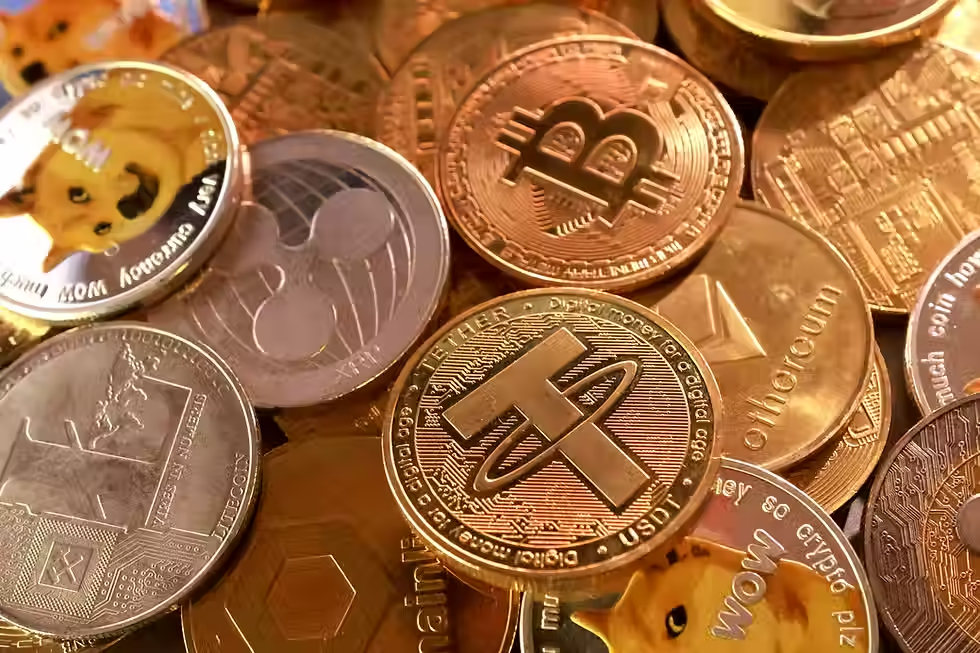
In a landmark shift that redefines what ownership means in the digital age, the United Kingdom has officially woven cryptocurrencies and other blockchain-based assets into its property law. This transformation became reality with the passage of the Property (Digital Assets etc) Act, which received Royal Assent this week—King Charles’s final seal that turns a bill into binding law. With that signature, legal traditions that have stood for centuries have been rewritten to match a world where value increasingly exists online rather than in physical form.
Until now, U.K. property law recognized only two categories: physical possessions that someone can literally hold, and enforceable rights such as debts or contractual claims. The new law introduces an entirely fresh category dedicated to digital assets—cryptocurrencies, NFTs, and other tokenized forms of value that do not fit neatly into either traditional box. It is a structural update designed to give these virtual items a clear and legitimate legal identity.
The crypto industry has welcomed the change, viewing it as a major step toward strengthening confidence across the digital economy. CryptoUK noted that the new framework gives users clearer ownership rights and better protection, especially in cases involving fraud, theft, insolvency, or estate matters. Gurinder Singh Josan, co-chair of the Crypto and Digital Assets All Party Parliamentary Group, added that the act finally gives consumers the straightforward legal recognition they need in order to safely navigate this evolving space.
Although U.K. courts have previously treated cryptocurrency as property, those decisions were made one case at a time. This act formalizes the principle once and for all, removing uncertainty and ensuring that digital assets are legally recognized across the board. With this step, the U.K. positions itself at the forefront of modern property law, acknowledging that ownership in the twenty-first century is just as likely to exist on a blockchain as in a bank vault.


Comments